Table Of Content
- In the ’70s, the Dalit Panthers Made Pocket-Sized Magazines That Challenged Social Hierarchies in India
- The Graphic Support Group Podcast Asks Designers to Listen Deeper and Feel More Broadly
- We Spoke With the Last Person Standing in the Floppy Disk Business
- A Font Inspired by Egyptian Streets That Addresses a Problem for Arabic Designers
- Design Series
- Related Articles

” “Compared to art or film criticism, the term ‘graphic design criticism’ has an unfamiliar, slightly uncomfortable ring,” Poynor begins. “It is one that even the most avid reader of graphic design magazines and books will encounter rarely, if at all.” The two go on to discuss the relationship between design and writing and what type of design criticism they want to see more of. Where Poynor articulates a type of ‘journalistic criticism’ that frames a designer or designed object in a larger context, Rock was interested in applying cultural criticism, like literary theory or semiotics, to design writing. “By utilizing a digital platform, we can work collectively as a design community to discover, document, and preserve our shared design history,” Sandhaus said.
In the ’70s, the Dalit Panthers Made Pocket-Sized Magazines That Challenged Social Hierarchies in India
Born in Memphis, Tennessee, in 1929, Kavanaugh’s creativity was recognized at an early age by her parents, who enrolled her at the Memphis Academy of Arts Junior Saturday School. After receiving her BFA in 1951, she began class at Cranbrook Academy of Art in Bloomfield Hills, Michigan, just outside Detroit, and it forever shaped her view of what was possible. Create customized terms and conditions for different types of design engagements. Curated by our Design Educators Community (DEC), explore the collection of resources tailored for design educators. Join today to access networking through your local chapter and a wide variety of local and national programs and events.
Eye on Design: review - Creative Bloq
Eye on Design: review.
Posted: Fri, 13 Apr 2018 07:00:00 GMT [source]
The Graphic Support Group Podcast Asks Designers to Listen Deeper and Feel More Broadly
She injected her “radically upbeat” design aesthetic into a slew of other urban spaces outside of sunny California, like Detroit, Chicago, Austin, Rochester, Albuquerque, and Pittsburgh. Find the help you need to navigate the design industry post-graduation. Borrowing from the design language of startups, public spaces are positioning themselves as both destination and consumable experience. Jina Anne shares her thoughts on using design systems to empower and strengthen your creativity while still keeping its goals of scale, maintainability, and efficiency at heart. Early visions of video call technology didn’t involve staring at your own self image, but today it’s inescapable.
We Spoke With the Last Person Standing in the Floppy Disk Business
As a suburban teenager who had never met a graphic designer before, my introduction to the field was the then-new blog Design Observer, founded by Poynor, Drenttel, Bierut, and Jessica Helfand in 2003. As a teenager I ate them up, pouring over new posts as soon as I got home from school. In many ways, Sandhaus’s contributions to design discourse are, in a sense, an extension of her role as a mentor to the design community.
A Font Inspired by Egyptian Streets That Addresses a Problem for Arabic Designers
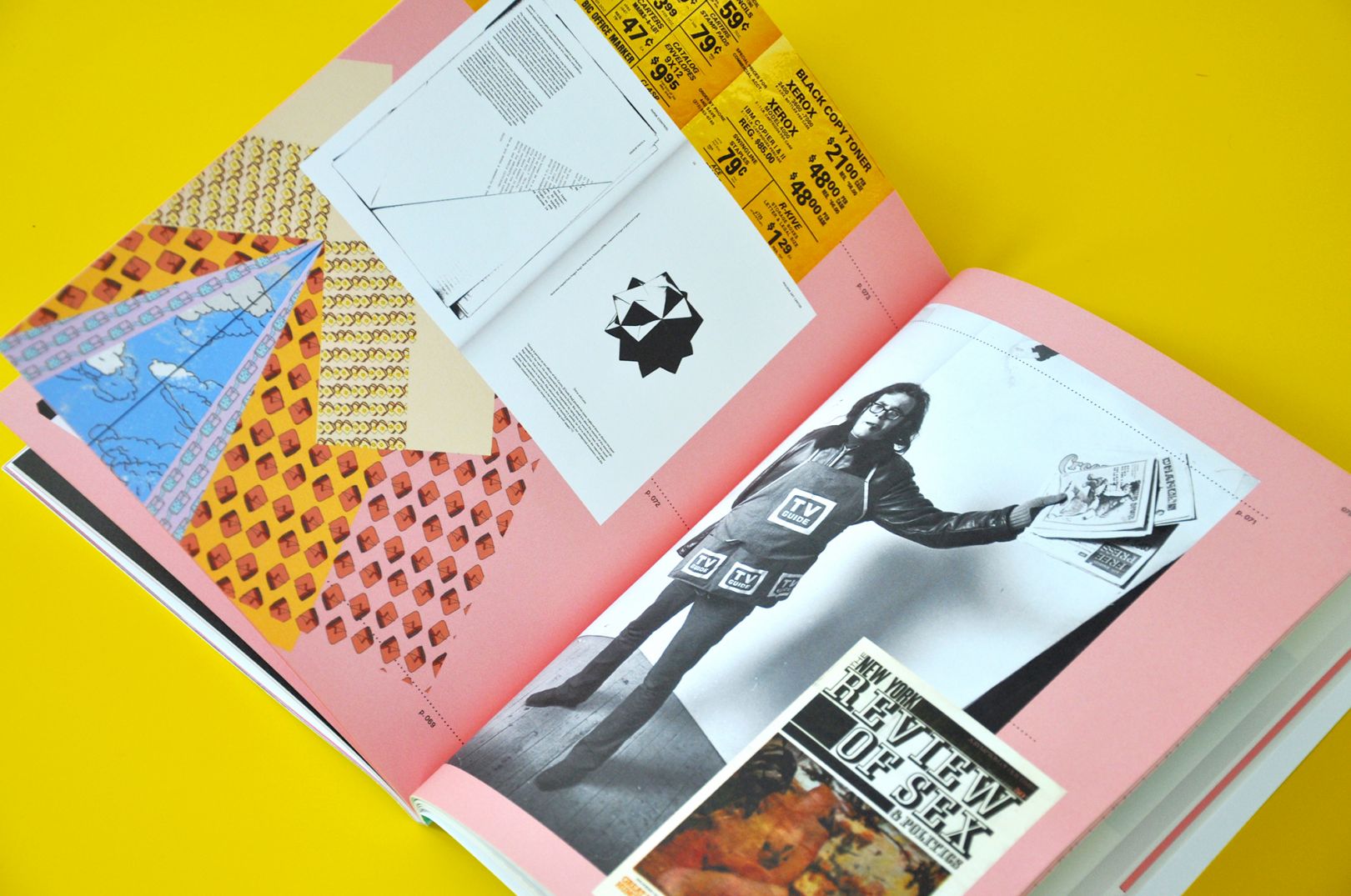
Last year, Print ceased publication (it’s since relaunched as online-only). SpeakUp shut down in 2009 as Vit and Gomez-Palacio focused on Brand New, the output on Design Observer slowed to a trickle, and dozens of other design blogs fell dormant. We graphic designers have a love-hate relationship with criticism. We want the general public to understand what we do, yet when they write about our work, we pick apart how they got it wrong. Ask a dozen designers what graphic design criticism is and you’ll get a dozen different answers.
We must begin to believe our own rhetoric and see design as an integrative field that bridges many subjects that deal with communication, expression, interaction, and cognition. Design should be about the relationship of form and communication. Design’s position as conduit for and shaper of popular values can be a path between anthropology and political science. Art and education can both benefit through the perspective of a field that is about expression and the mass dissemination of information.
Mail-Order Ice Cream Is Trying to Be More Sustainable. But It Still Doesn’t Make Much Sense
The AIGA Design Podcast explores how design is changing as a profession. Kavanaugh reached a turning point in 1960 when she took an offer from Victor Gruen to join their main office in Los Angeles. At this point, “everything gets turned up.” Sandhaus says “It was there already, but it becomes larger and more colorful.” In 1964, in the design for the Mayfield Mall in Mountain View, California, Kavanaugh included a carpet that was just one enormous daisy. “You see this kind of riot go on—crazy supergraphics, whimsical uses of plexiglass, whimsical floral elements. Kavanaugh draped hot pink chiffon banners from the ceiling, installed futuristic, starburst light fixtures, and designed a set that involved 100 rented canaries in thirty-foot-tall net towers. “The joy was in her work even before she came to California,” Sandhaus says.
Certificates for Creatives
Take in the latest articles about design and news from the AIGA community. “It seems like the idea of ‘anything goes’ could be realized here because no one was paying attention,” says Sandhaus. “They didn’t have to get noticed or meet the standards of the East Coast. Gere was encouraged to look at all design practices.” California was the state of technicolor; brighter, and more vivid than our reality.
“These posters came about mostly as part of the world-building of Ennui-sur-Blasé,” says Dorn. A new generation of graphic designers are using the medium to process our relentless age of anxiety. Contributors include the book's editors, Liz Stinson and Jarrett Fuller, and such outstanding design writers as Rick Poynor, Anne Quito, Briar Levit, Cliff Kuang, and many more. Accessible, engaging, and conversational, What It Means to Be a Designer Today is an enduring resource and vibrant gift book that speaks to design students and educators, working designers of all levels, and anyone interested in graphic design. However, Steinberger says not all the designers featured in the show were early adopters of the computer and digital type.

She designed interior kitchen models for GM’s Frigidaire division, a slew of trade shows, and the 1958 French garden party-inspired Feminine Auto Show, developed in an attempt to appeal to women. The lofty, domed exhibition space, designed by Eero Saarinen, made for an ongoing design challenge to be addressed with each new trade show. Kavanaugh draped hot pink chiffon banners from the ceiling; installed dramatic sculptural elements; and for the Feminine Auto Show in particular, designed a set that involved 100 rented canaries in thirty-foot-tall net towers. Looking back on her career, Sandhaus credits her own mentors and colleagues as catalysts for her creative development, which in turn has led her to continue their legacy of fostering the next design generation. “The training of my mentors changed the trajectory of my work, strengthening my conceptual thinking to allow me to bring writing as well as visual design into my practice,” she said. Explore our collection of resources for freelancers, business owners, design educators, students, in-house designers, and other design professions.
From the boom of tech companies in the seaport district, to the tradition of print in Cambridge and everything in between The Boston Designcast is here to highlight the design that shapes how we live and where you can find it. A look at the community-oriented practices of Bastion Agency, Nontsikelelo Mutiti, Nat Pyper, and Suzy Chan.
Take Billy Al Bengston, credited with that famous “We’ll figure out what art is” quote. Likewise, much of the CalArts Graphic Design Program faculty at the time, credited with creating the California aesthetic, was trained by Cranbrook’s caution-to-the-wind program. For many new arrivals from across the U.S., California had been a beacon of optimism to travel toward, with the color palette to match. AIGA Baltimore and the Society of Design Arts (SoDA) are hosting a series of events created to promote the rich and plural histories of Latin American production in design. Thank you to SoDa member, Raquel Castedo, AIGA Unidos, Stevenson University, the Vancouver Latin American Cultural Centre, and the Design History Society for partnering with us. Being a member of AIGA has given me access to educational resources for my professional development and business opportunities...it's opened the door to meaningful relationships with a diverse group of dedicated people with whom I'm proud to be in community with.
A multidisciplinary practice, experience design may involve psychologists, anthropologists, computer programmers, and business experts, as well as communication, product, and architectural designers. A business, for example, may be concerned about bridging the customer online and in-store experiences, while a museum may think in terms of the casual visitor versus member experiences. Another defining factor that set California apart from the East Coast design world at the time was the sheer number of women practicing graphic design out East. Retaining greater autonomy in one’s work was a driving force behind postmodern design theory, but it also was relevant from a feminist perspective. Sheila Levrant de Bretteville’s poster for the Women’s Graphic Center illustrates just that, as it advocates the need for women to learn how to print and set type in order to create their own content. Levrant de Bretteville asserted that embracing digital technologies would facilitate greater access to those tools.
After gaining recognition for her work, she decided to leave the magazine to freelance and experiment with her craft, all while teaching at the Art Institute of Boston. Eye on Design publishes stories that cover the issues important to the global design world through untold histories, reported features, and op-eds. Our goal is to elevate the voices of contemporary designers as a way to build a more engaged and conscientious design community. Experience design addresses the entire user journey in acquiring and using information, products, and/or services.


No comments:
Post a Comment